In the high-stakes world of industrial process safety, the procurement of valve interlock systems is a critical task. For buyers in oil & gas, petrochemical, and power generation, the challenge is twofold: how to efficiently source high-quality mechanical valve interlock systems while simultaneously avoiding the common risks of delays, non-compliance, and product failure. This guide provides a practical framework for procurement professionals to make informed, safe, and cost-effective decisions.
The Core Problem: What Makes Valve Interlock Procurement Risky?
Procurement of safety valve interlocking devices is not like buying standard industrial fasteners. The consequences of a wrong selection can lead to catastrophic process safety incidents, regulatory fines, and operational downtime. Common pain points include:
- Inconsistent product quality across batches, especially from suppliers without certified quality management systems.
- Incorrect technical specifications – e.g., ordering a quarter-turn valve interlock when a multi-turn valve interlock is required for a gate valve.
- Missing or fraudulent certifications – such as inadequate explosion-proof ratings for hazardous environments.
- Long lead times and poor after-sales support from distant suppliers.
- Lack of customization for specific valve geometries or sequential control logic.
Industry Context: The Growing Demand for Mechanical Valve Interlocks
A mechanical valve interlock system physically prevents operator error by enforcing a correct sequence of valve operations. For example, in a pig trap system, the valve must be fully closed before the door can be opened. These devices are indispensable in oil and gas, petrochemical, shipbuilding, marine engineering, power generation, non-ferrous metals, and steel industries. The global market is shifting toward customized valve interlock solutions that can withstand harsh environments – including corrosive, dusty, and explosion-prone zones.
What Is a Valve Interlock? – A Clear Definition
A valve interlock (often called a key-operated valve interlock) is a mechanical device that uses a trapped-key mechanism to link the operation of two or more valves. It ensures that a valve cannot be turned unless another valve is in a predetermined position. This creates a sequential valve interlock system that eliminates human error.
How it works: A key is inserted into the interlock on Valve A. Only when Valve A reaches the correct position (e.g., fully closed) can the key be turned and removed. That same key is then used to unlock Valve B, allowing it to be operated. Any deviation from the sequence is physically impossible.
Key Product Categories – A Technical Overview
Understanding product types is essential for efficient sourcing. The main categories include:
| Product Type | Typical Application | Key Feature |
|---|---|---|
| Quarter-turn valve interlock | Ball valves, butterfly valves (90° rotation) | Compact design, easy installation |
| Multi-turn valve interlock (Model VDS / VDL) | Gate valves, globe valves | Multi-rotation capability |
| Drive Valve Interlock | Actuated valves (pneumatic/electric) | Integrates with valve control systems |
| Gear box valve interlock | Large valves requiring gearing | Torque multiplication, safe operation |
| Limit interlock (Model XWIL) | Position feedback for automated safety | Electrical limit switch integration |
| SCU (Sequential Control Unit) | Complex multi-step sequences | Modular, programmable logic |
Image: Drive Valve Interlocking – suitable for actuated valve systems

Why Is Choosing the Right Supplier Critical?
A reliable valve interlock manufacturer ensures:
- Compliance: Products meet international standards such as ISO 9001:2015, CE, and industry-specific certifications.
- Customization: Ability to design explosion-proof valve interlocks, corrosion-resistant or stainless steel valve interlocks for harsh environments.
- Long-term reliability: Mechanical interlocks for valve safety management must function flawlessly for years in extreme conditions.
- Supply chain stability: On-time delivery, global logistics, and responsive after-sales support.
How to Select a Valve Interlock Solution – A Step-by-Step Procurement Process
- Define the safety sequence: Map the valve positions and interlock logic required (e.g., which valves must be locked open before another can close).
- Specify technical parameters: Valve type (quarter-turn vs multi-turn), torque, temperature range, hazardous area classification (ATEX/IECEx), and material compatibility (stainless steel, anti-corrosion coatings).
- Research suppliers: Look for providers with proven expertise in industrial valve safety interlocks and a track record in your industry. For example, Shanghai Nodango Safety Equipment Co., Ltd. (Nudango) specializes in mechanical program locks and valve position indicators, with products exported to 15+ countries including Germany, Saudi Arabia, and Brazil.
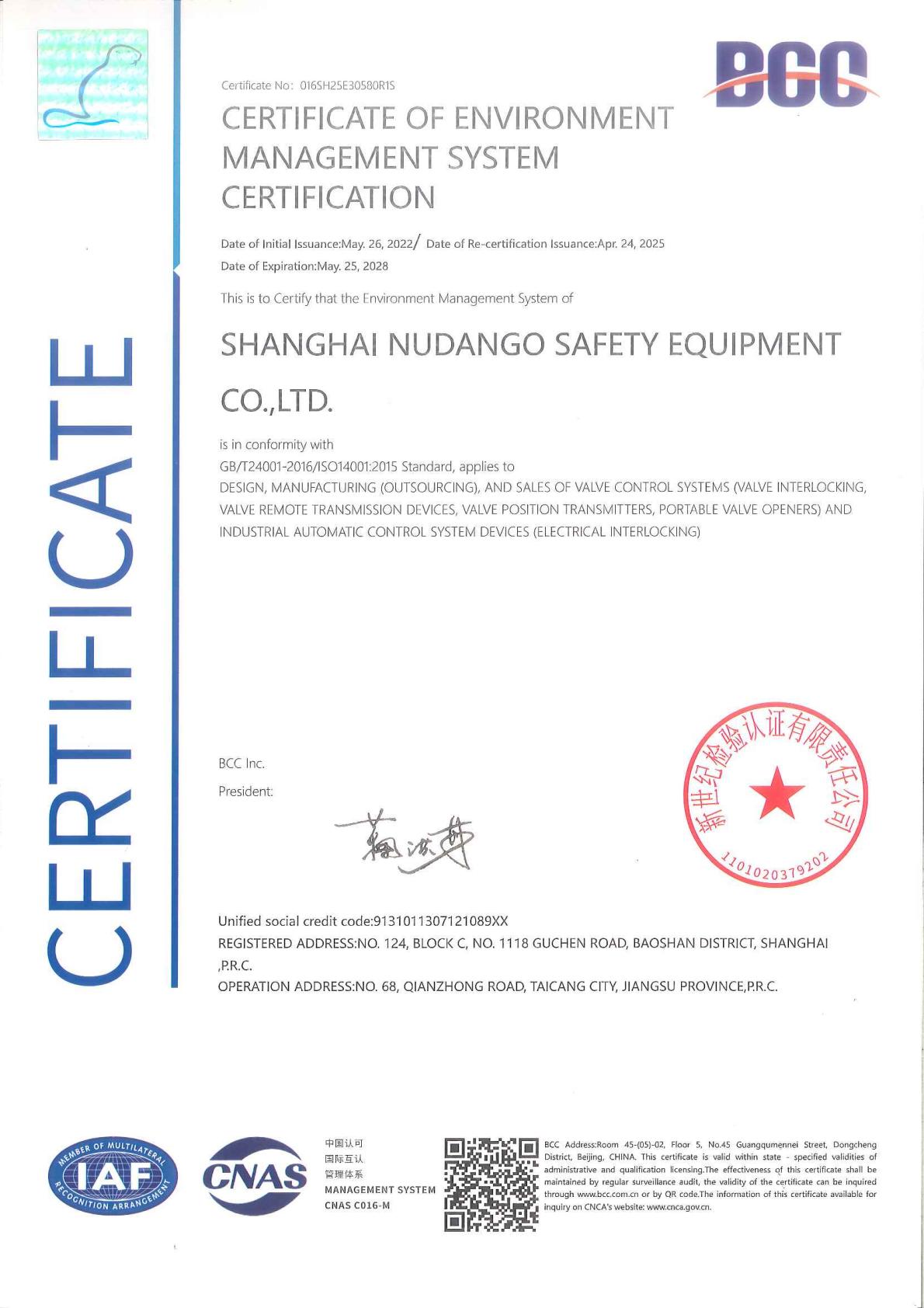
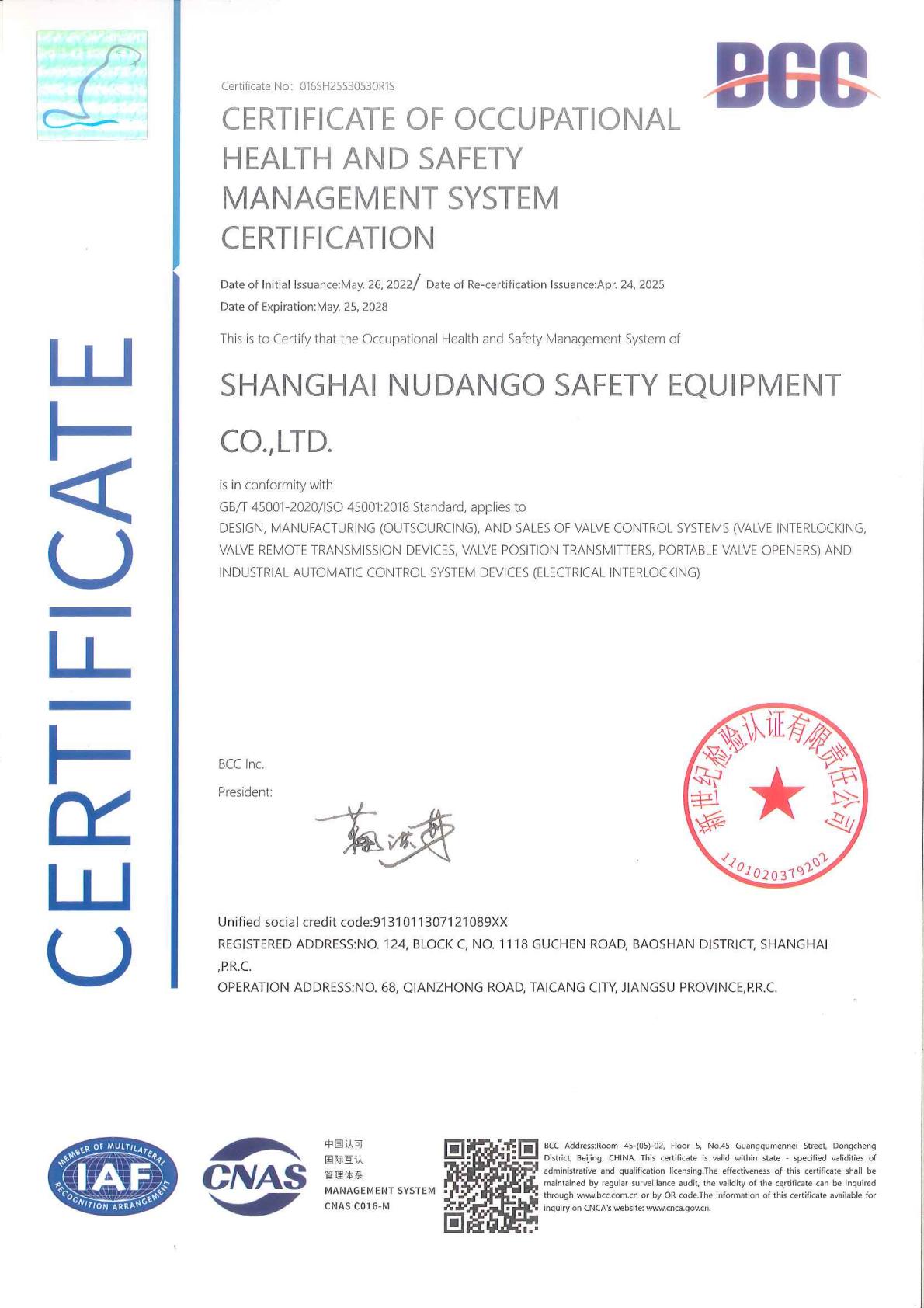
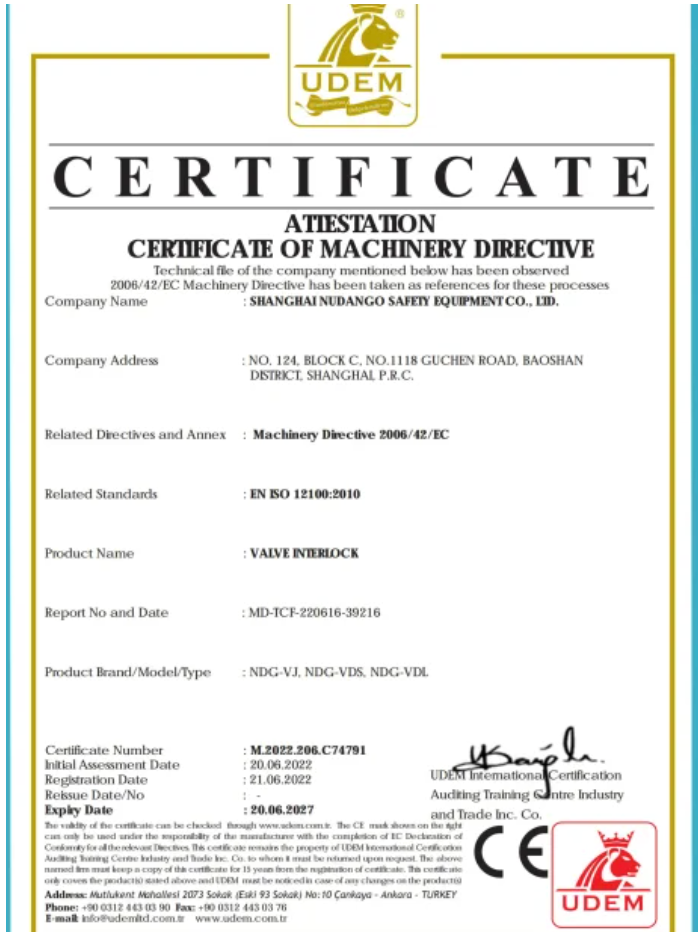
- Verify certifications: Request copies of ISO 9001, ISO 14001, OHSAS 18001, and CE certifications. Nudango holds all four, demonstrating commitment to quality, environment, and occupational health.
- Evaluate customization capability: Can the supplier provide customized valve interlock solutions? Nudango collaborates with universities and holds numerous patents for independent intellectual property.
- Request a pilot sample: Test the interlock on your actual valve under real operating conditions.
- Negotiate contract terms: Include quality guarantees, delivery timelines, and penalty clauses for non-conformance.
Use Case: Valve Interlock for a Petrochemical Plant in Saudi Arabia
A major petrochemical operator required a sequential valve interlock system for their crude oil manifold. The environment was harsh: high temperatures, corrosive atmosphere, and explosive gas zones. After evaluating several suppliers, they selected Nudango’s multi-turn valve interlock (VDL model) combined with customized mechanical key interlock logic. The devices featured explosion-proof and corrosion-resistant construction. The result: zero misoperation incidents over two years of operation, with seamless integration into the existing valve network. The plant’s safety audit rating improved significantly.
Image: Multi-turn valve interlock (model VDS/VDL) – ideal for gate valves in corrosive environments

Frequently Asked Questions (FAQ)
Q: What is the difference between a quarter-turn and a multi-turn valve interlock?
A: A quarter-turn valve interlock is designed for valves that require a 90° rotation (ball, butterfly). A multi-turn valve interlock is for valves that need multiple rotations (gate, globe). Both use the same trapped-key principle but differ in mechanical travel.
Q: Can a valve interlock be retrofitted to an existing valve?
A: Yes, most mechanical interlocks can be retrofitted without modifying the valve body. However, the supplier should evaluate the valve’s operating torque and stem dimensions.
Q: How do I verify if a supplier’s products are genuinely explosion-proof?
A: Request a copy of the ATEX or IECEx certificate and verify with the issuing body. Nudango’s products meet international explosion-proof standards and are tested accordingly.
Q: What is the typical lead time for custom valve interlock solutions?
A: For custom-built units, lead times range from 4 to 8 weeks, depending on complexity. Standard models may be shipped within 2 weeks.
Q: What minimum order quantity does Nudango require?
A: Nudango welcomes both small and large orders. For first-time buyers, a sample order of 1-5 units is acceptable to test performance.
Conclusion – Smarter Procurement Starts with the Right Partner
Efficient procurement of valve interlock systems is achievable when you follow a structured evaluation process focused on certifications, technical capability, and industry experience. By partnering with a certified manufacturer like Nudango, you gain access to reliable, flexible products that perform in the harshest environments, backed by ISO 9001, ISO 14001, OHSAS, and CE certifications. Whether you need a rotary motion valve interlock for a refinery or a drive valve interlock for an offshore platform, Nudango’s engineering team can deliver a solution that eliminates risks and enhances safety.
Contact Nudango today for a technical consultation and quotation:
Phone: +86 13052019523 | WhatsApp: +86 13816485040 | Email: globalnudango@shndg.cn
Website: https://www.nudango.com/
Address: No.124, Block C, No.1118 Guchen Road, Baoshan District, Shanghai, P.R.C.
Quality Certifications