Introduction
Choosing the right valve interlock supplier is a critical decision for industrial procurement professionals. With process safety regulations tightening worldwide and plant operators demanding higher reliability, understanding the global supplier landscape—and how to evaluate suppliers from key manufacturing countries—has become essential. This guide focuses on Chinese valve interlock manufacturers, offering a structured approach to selection, regional compliance requirements, and a real-world case study of a leading supplier that has successfully penetrated international markets.
1. Global Supplier Geography: Where to Find the Right Valve Interlock
The valve interlock market is dominated by three primary manufacturing regions, each with distinct strengths:
- China: Known for high cost-performance ratio and exceptional customization capabilities. Chinese suppliers like Nudango (Shanghai Nodango Safety Equipment Co., Ltd.) can produce customized valve interlock solutions—including stainless steel valve interlocks, explosion-proof valve interlocks, and corrosion-resistant designs—at competitive prices with short lead times. Many have obtained international certifications such as CE, ISO 9001, and ATEX.
- Germany: Represents the high-end engineering segment. German manufacturers focus on precision mechanics, heavy-duty mechanical valve interlock systems for demanding applications in the chemical and oil & gas industries. Products are reliable but often come with higher costs and longer delivery times.
- Japan: Emphasizes precision manufacturing and miniaturization. Japanese valve interlock brands excel in key-operated valve interlocks for compact installations and offer superior quality control, though they may lack the flexibility for extensive custom orders.
For buyers seeking a balance of quality, cost, and bespoke engineering, Chinese suppliers have become the go-to choice, especially for projects requiring sequential valve interlock systems or customized valve interlock solutions tailored to specific pipeline layouts.
2. 5 Key Considerations When Selecting a Chinese Valve Interlock Supplier
When sourcing from China, ensure your supplier meets these five critical criteria:
- Verify Export Certifications: Confirm that the supplier holds internationally recognized certifications such as CE (EU), ATEX (explosive atmospheres), UL (USA), and ISO 9001. Nudango, for example, has obtained CE certification and the ISO 9001:2015 Quality Management System, alongside Environmental and Occupational Health & Safety management systems.
- Confirm Cross-Border Logistics: Ask about delivery terms (FOB, CIF, DDP), packaging for long-distance shipping, and typical transit times. Chinese suppliers experienced in exporting—like Nudango, which ships to Germany, Brazil, Saudi Arabia, and India—can handle documentation, customs clearance, and Incoterms efficiently.
- Clarify After-Sales Support: Does the supplier offer technical consultation, installation guidance, and remote troubleshooting? A dedicated valve interlock for oil and gas industry project often requires ongoing support. Nudango provides pre-sales engineering design, on-site commissioning assistance, and lifetime technical support.
- Evaluate Customization Capability: Many industrial projects require customized valve interlock solutions—non-standard key codes, special materials, or unique mounting configurations. Chinese manufacturers with in-house R&D, like Nudango (holding multiple patents), can deliver quarter-turn valve interlocks, multi-turn valve interlocks, drive valve interlocks, and gear box valve interlocks tailored to your exact specifications.
- Inspect Manufacturing Standards: Visit the factory (virtually or physically) to assess production processes, quality control, and inventory. Nudango’s workshop in Shanghai features advanced machining centers, assembly lines, and a dedicated testing lab for mechanical key interlocks for valves, ensuring consistent output for harsh environment valve interlocks.

Nudango's Drive Valve Interlock – ideal for automated valve systems requiring safety valve interlocking device integration.
3. Regional Compliance Requirements for Importing Valve Interlocks
When importing mechanical valve interlock systems into different regions, buyers must ensure compliance with local standards:
- European Union (CE Marking): The CE mark certifies conformity with health, safety, and environmental requirements. Additionally, ATEX Directive 2014/34/EU is mandatory for explosion-proof valve interlock devices used in potentially explosive atmospheres (e.g., petrochemical plants).
- United States (UL & NEC): Products must meet UL 991 (Standard for Safety for Mechanical Locking Devices) and comply with the National Electrical Code for hazardous locations. UL certification is often a prerequisite for US-based oil & gas and chemical facilities.
- Middle East & Asia: Many countries accept CE or IECEx certifications. For example, Saudi Aramco standards require corrosion-resistant valve interlocks with a minimum of 316L stainless steel for offshore environments.
- Customs Tariffs: Check the HS code (usually 8481.90 for valve parts) and applicable import duties. China’s valve interlock exports benefit from trade agreements with ASEAN, reducing tariff barriers.
Working with a supplier like Nudango that already possesses CE certification and ISO management systems significantly de-risks the compliance process.
4. Success Story: Nudango Supplies Valve Interlocks for a German Petrochemical Plant
In 2025, a German petrochemical integrator needed sequential valve interlock systems for a new solvent recovery unit. After evaluating suppliers from Germany and Japan, they turned to Nudango for the following reasons:
- Local Certification: Nudango’s products already held CE + ATEX certifications, meeting EU mandatory requirements without re-testing.
- Customization: The plant required multi-turn valve interlocks with a special key locking pattern to prevent operator error during batch sequence changes. Nudango’s engineering team designed a customized mechanical key interlock for valves within two weeks.
- Logistics & Support: Using FOB Shanghai, Nudango delivered the first batch of 120 units in 28 days. They provided online installation training and a 24-month warranty. When a minor issue arose with the rotary motion valve interlock on a quarter-turn actuator, Nudango sent a replacement via DHL within 48 hours.
- Quality Assurance: All units underwent rigorous functional testing, including salt spray and temperature cycling, proving their suitability for harsh environment valve interlock applications.
Today, the German plant runs over 400 Nudango interlocks, and the client has expanded the partnership to two other facilities in Poland and Belgium.
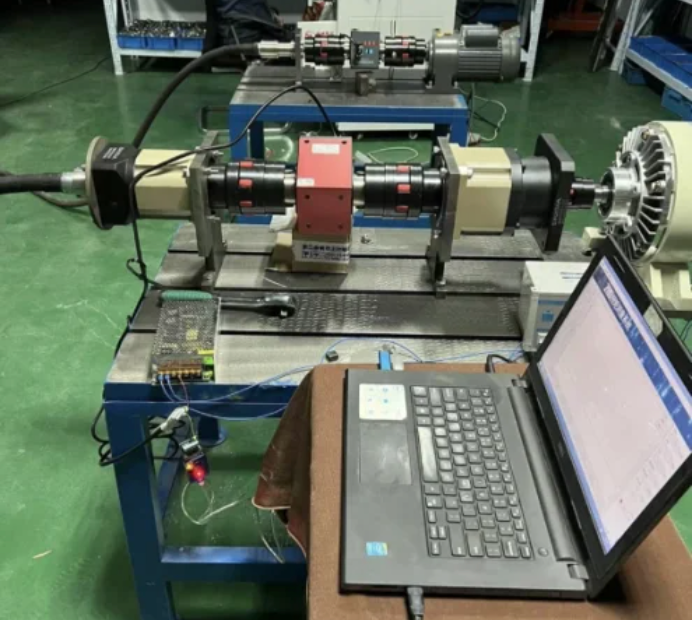
Nudango’s modern production workshop ensures consistent quality for pipeline valve interlock safety devices.
Conclusion
Selecting a Chinese valve interlock supplier no longer means compromising on quality. By following the five-point checklist, verifying regional compliance, and partnering with a certified, experienced manufacturer like Nudango (Shanghai Nodango Safety Equipment Co., Ltd.), industrial buyers can reduce costs while ensuring operational safety. Whether you need a key-operated valve interlock, a sequential valve interlock system, or a corrosion-resistant stainless steel valve interlock for offshore use, Nudango delivers reliable, certified solutions for global projects.
For more information or to request a quote, contact Nudango today:
- 📞 Phone/WhatsApp: +86 13052019523 / +86 13816485040
- 📧 Email: globalnudango@shndg.cn
- 🌐 Website: https://www.nudango.com
- 🏭 Address: No.124, Block C, No.1118 Guchen Road, Baoshan District, Shanghai, China