A Procurement Guide: How to Identify and Select Reliable Valve Interlock Suppliers
For procurement professionals in high-risk industries like oil & gas, petrochemicals, and power generation, selecting the right valve interlock supplier is a critical decision that impacts operational safety, regulatory compliance, and total cost of ownership. A mechanical valve interlock system is not a commodity; it is a vital safety component that prevents hazardous operational sequences, protects personnel, and safeguards multi-million dollar assets. This guide provides a structured framework to evaluate and select a supplier that aligns with your technical, commercial, and quality requirements.
Core Evaluation Criteria for Valve Interlock Suppliers
Beyond basic price comparisons, a thorough supplier assessment should cover the following dimensions:
1. Technical Capability and Product Portfolio
A capable supplier should offer a comprehensive range of solutions to address diverse valve types and safety scenarios. Look for expertise in:
- Standard Product Lines: Availability of quarter-turn valve interlock and multi-turn valve interlock systems as foundational products.
- Specialized Solutions: Ability to provide drive valve interlock, gear box valve interlock, and rotary motion valve interlock systems for complex actuation setups.
- System Design: Proficiency in engineering sequential valve interlock systems and customized valve interlock solutions for unique process safety requirements.
- Material & Environmental Suitability: Offering stainless steel valve interlock, corrosion-resistant valve interlock, and explosion-proof valve interlock options for harsh environment applications, particularly in the oil and gas industry and petrochemical valve interlock system installations.
For example, a supplier like Shanghai Nodango Safety Equipment Co., Ltd. (Nodango) demonstrates this breadth with a portfolio covering mechanical key interlocks, sequential control units (SCU), and specialized locks for various valve operations, supported by in-house R&D and patented technologies.
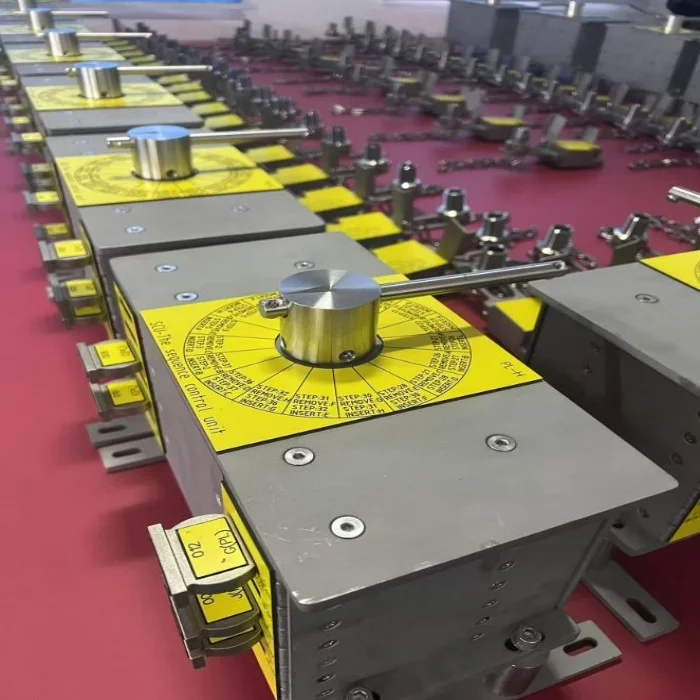
Fig: A Sequential Control Unit (SCU) for enforcing operational procedures.
2. Quality Management and Certifications
Certifications are non-negotiable indicators of a supplier's commitment to consistent quality and international standards. Essential certifications include:
- ISO 9001:2015 Quality Management System: Ensures standardized processes for design, manufacturing, and service.
- Environmental (ISO 14001) and Occupational Health & Safety (ISO 45001) Management Systems: Reflects a holistic approach to responsible operations.
- CE Marking: For products intended for the European market, indicating conformity with health, safety, and environmental protection standards.
Procurement teams should verify these certificates directly. Reputable suppliers, such as Nodango, publicly adhere to the GB/T19001-2015 idt ISO9001:2016 standard and hold relevant management system certifications, which can be a significant differentiator.
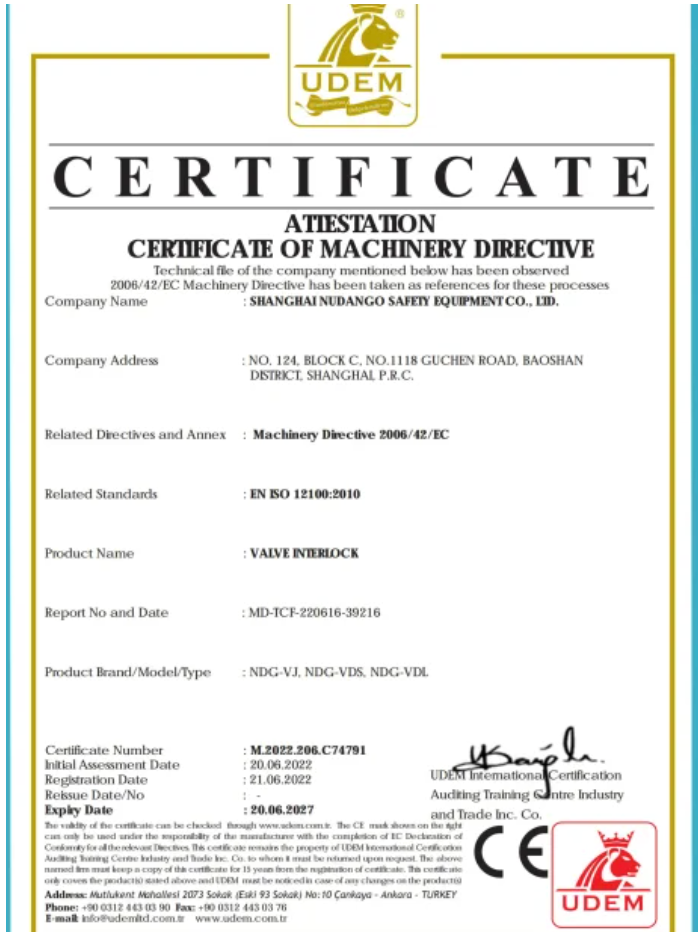
Fig: CE certification is crucial for market access in many regions.
3. Manufacturing Infrastructure and Supply Chain Stability
The ability to deliver reliably, especially for large or urgent projects, depends on robust manufacturing capabilities. Evaluate:
- Production Capacity: Scale of workshops and availability of advanced machinery.
- Inventory Management: Strategic stock of raw materials and common components to mitigate supply chain disruptions.
- Process Control: Implementation of lean manufacturing and quality control at each production stage.
Suppliers with vertically integrated manufacturing and organized warehouses, as seen in Nodango's production facilities, typically offer better lead time consistency and quality control.
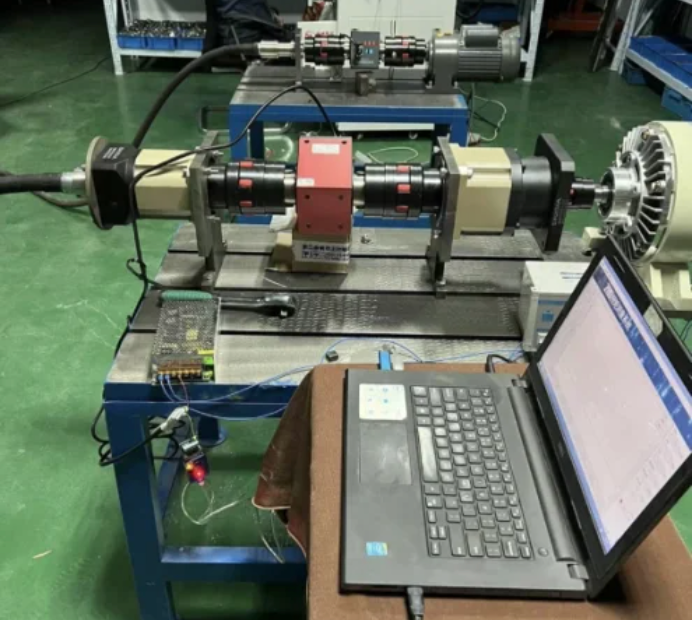
Fig: An organized production workshop is key to consistent quality.
4. Industry Experience and Global Track Record
Experience in your specific sector is invaluable. A supplier familiar with the unique challenges of pipeline valve interlock safety device applications in the petrochemical sector will provide more relevant solutions than a general hardware provider. Assess:
- Project Portfolio: Request case studies or references from similar industries (e.g., marine engineering, power generation, steel).
- Global Reach: Export history to diverse regions like the Middle East, Europe, or Southeast Asia indicates product adaptability to different standards and climates. Companies with exports to markets like Germany, Saudi Arabia, and Brazil have demonstrated this capability.
- After-Sales Support: Availability of technical consultation, installation guidance, and maintenance services, which are critical for mechanical interlock for valve safety management systems.
5. Innovation and Customization Potential
Standard products may not fit every valve or safety sequence. The supplier's ability to innovate and customize is crucial. Inquire about:
- R&D Investment: Collaboration with universities or research institutions.
- Patent Portfolio: Number of patented technologies with independent intellectual property rights.
- Engineering Support: Willingness to engage in co-design or develop customized valve interlock solutions for non-standard valves or complex sequential logic.

Fig: Specialized interlock for gearbox-operated valves.
Actionable Procurement Checklist
Use this list during your Request for Quotation (RFQ) or supplier audit process:
- Does the supplier hold valid ISO 9001, ISO 14001, ISO 45001, and relevant product certifications (e.g., CE)?
- Can they provide a full range from key-operated valve interlock to complex sequential systems?
- Do they have documented experience in your industry (Oil & Gas, Chemical, etc.)?
- What is their typical lead time for standard and custom orders?
- Do they offer full technical documentation, installation manuals, and after-sales support?
- Can they provide references from projects with similar scope?
- What is their policy on warranty, spare parts availability, and product lifecycle?
Selecting a valve interlock supplier is a strategic partnership that extends beyond a single purchase. By rigorously evaluating technical prowess, quality assurance, manufacturing strength, and industry expertise, procurement professionals can secure a reliable source for industrial valve safety interlock solutions. This diligence ensures the implemented safety valve interlocking device performs reliably, enhances overall plant safety, and delivers long-term value. For more detailed information on specific valve interlock technologies and applications, visiting a supplier's official resource center, such as Nudango's website, can provide further technical insights.